
The Main Problem Faced by Many Small Business Owners
One of the questions many small business owners have is whether or not it is safe to use shared hosting for their businesses. In most cases, this issue comes up after they get information regarding the risks of using shared hosting – hacked accounts, slow page speed, or even loss of files and databases.
However, in reality, it can be quite safe to use this type of hosting service. According to surveys carried out in the sector, more than 70% of all new websites are hosted via shared hosting as it is relatively cheaper and easier to use. It becomes problematic when users do not follow common safety measures or opt for low-quality services. This is why it would be better to learn about potential issues and handle them effectively rather than avoid using shared hosting at all costs.
What Is Shared Hosting and How Does It Work?
Before discussing the aspect of safety, let us try to figure out what shared hosting actually is. By shared hosting, we mean that several different websites share the same physical server, which is very cost-effective because all resources of the server will be used by several individuals.
For instance:
- Hundreds of small websites are hosted on one single physical server
- All the websites get some space of storage, RAM, and bandwidth
- Server management services are provided by the hosting provider
And this is why shared hosting can be considered as the most cost-effective hosting plan.
Is Shared Hosting Safe for Small Business Websites?
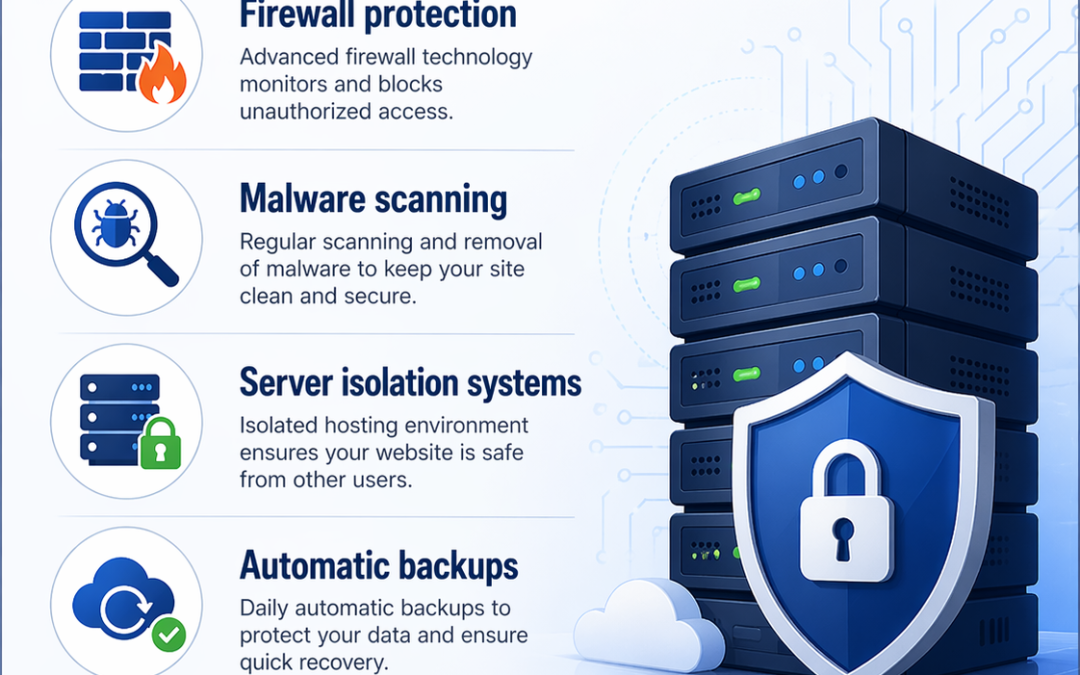
The short answer is: Yes, shared hosting can be safe, but only if you follow good practices and choose reliable providers. Modern secure web hosting companies use advanced technologies to protect users. These include:
- Firewall protection
- Malware scanning
- Server isolation systems
- Automatic backups
- SSL security support
According to cybersecurity reports, 43% of cyberattacks target small businesses, but most attacks succeed because of weak passwords, outdated software, or poor security habits—not because of shared hosting alone. So, safety depends more on how you manage your website than the hosting type itself.
Common Security Problems in Shared Hosting (and How to Fix Them)
Many beginners face problems because they do not know what causes website risks. Below are common issues and their solutions.
- Problem: Website Gets Hacked
This is one of the biggest fears among small business owners.
Causes:
- Weak passwords
- Outdated plugins or themes
- Lack of malware protection
Solutions:
- Use strong passwords with letters, numbers, and symbols
- Update plugins and themes regularly
- Install security plugins or tools
- Choose hosting with built-in malware scanning
Tip: Studies show that over 60% of hacked websites had outdated software, which makes updates extremely important.
- Problem: Website Runs Slowly
Slow speed affects user experience and sales. Research shows that 40% of visitors leave a website that takes more than 3 seconds to load.
Causes:
- Too many websites sharing resources
- Large images or unoptimized content
- Low-quality hosting providers
Solutions:
- Optimize images before uploading
- Use caching tools
- Upgrade hosting plan if traffic increases
- Choose reliable secure web hosting services
- Problem: Data Loss Without Backups
Losing website data can be very damaging for small businesses.
Causes:
- Server errors
- Accidental deletion
- Malware attacks
Solutions:
- Select hosting with backups
- Create manual backups regularly
- Store copies in secure cloud storage
Fact: Experts recommend daily backups for business websites to reduce data loss risks.
Shared Hosting vs Other Hosting Types
Understanding how shared hosting compares with other hosting types can help you decide what suits your needs.
| Feature | Shared Hosting | VPS Hosting | Dedicated Hosting |
| Cost | Low | Medium | High |
| Security Level | Good (with proper setup) | Better | Highest |
| Performance | Basic to Moderate | High | Very High |
| Suitable For | Beginners, small websites | Growing businesses | Large companies |
| Maintenance | Managed by host | Partially managed | Fully customizable |
Key Insight: Many small businesses successfully use shared hosting during their early stages and upgrade later as their website grows.
Best Security Practices for Safe Shared Hosting
If you want better website safety, follow these proven security steps.
Use Strong Passwords
Always create passwords that are:
- At least 12 characters long
- A mix of letters, numbers, and symbols
- Different for each account
Avoid using simple passwords like “123456” or “password”.
Install an SSL Certificate
SSL certificates protect customer information by encrypting data.
You can recognize secure websites by:
- HTTPS in the URL
- A lock symbol in the browser
Google reports that over 95% of websites now use HTTPS, showing how important this security step is.
Keep Software Updated
Updates fix security holes that hackers can exploit.
Update regularly:
- Website CMS (like WordPress)
- Plugins
- Themes
This is one of the easiest ways to improve shared hosting security.
Choose Trusted Hosting Providers
Not all hosting companies offer the same level of safety. Reliable hosts include features such as:
- Firewall protection
- Malware scanning
- Server monitoring
- Hosting with backups
- 24/7 customer support
Reading customer reviews and checking uptime guarantees can help you choose wisely.
When Shared Hosting May Not Be Enough
Although shared hosting works well for many beginners, there are times when upgrading becomes necessary.
You may need better hosting if:
- Your website receives more than 50,000 visitors per month
- You store sensitive customer data
- Your website handles online payments
- Speed problems happen frequently
In these cases, moving to VPS or dedicated hosting can provide better performance and stronger security.
How to Know If Your Current Hosting Is Secure
Many business owners do not know how to check their website safety. Here are simple signs that your hosting is secure.
Look for these features:
- Daily or weekly backups
- Free SSL certificate
- Regular malware scanning
- Firewall protection
- Uptime above 99.9%
- Easy restore options
If your hosting provider offers these tools, your secure web hosting setup is likely reliable.
Real-Life Example: Why Security Matters
Imagine a small online store running on shared hosting. The owner ignores updates for several months. Eventually, hackers exploit outdated software and inject malware.
As a result:
- The website goes offline
- Customer trust drops
- Search rankings fall
- Sales stop temporarily
However, if backups and updates were used regularly, recovery would take only minutes. This example shows that security habits matter more than hosting type.
Is Shared Hosting Safe for Your Small Business?
So, is shared hosting safe for your small business website? Yes, it can be a safe and smart choice, especially for beginners and small businesses with limited budgets.
Remember, millions of small business websites run safely on shared hosting every day. The key is not just choosing hosting, but managing it responsibly. If you are just starting your website journey, shared hosting offers a cost-effective and reliable solution. Then, as your business grows, you can upgrade to stronger hosting options when needed.
By following these simple steps, you can protect your website, maintain customer trust, and run your small business online with confidence.