
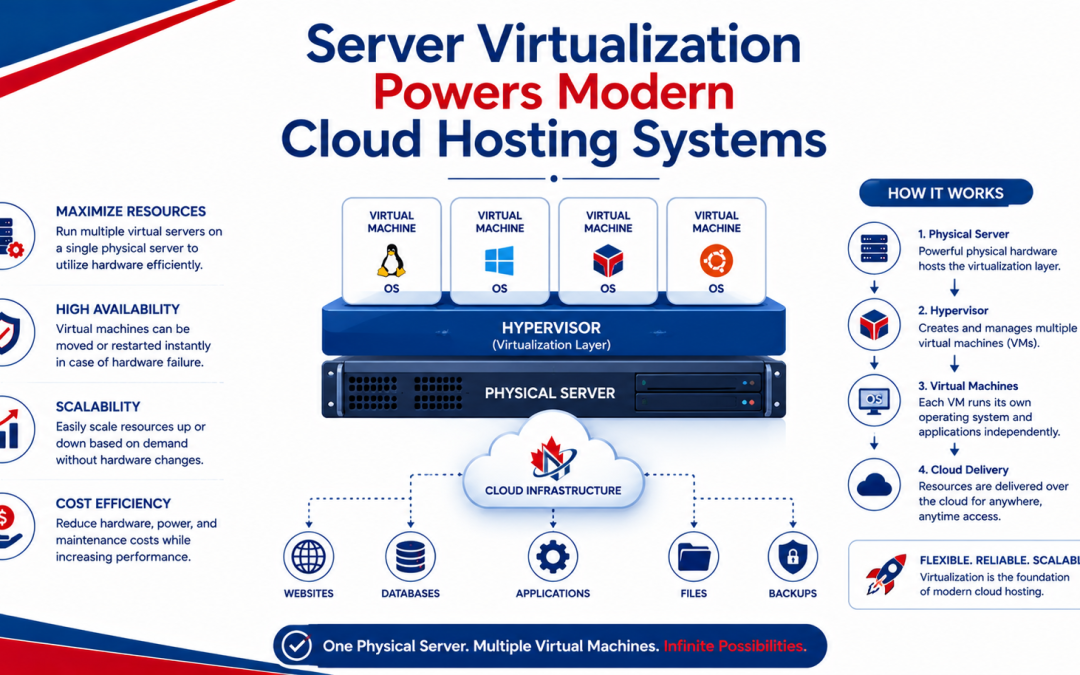
Server virtualization is a way to make one big physical server work like many small servers. It is used in modern hosting to help websites and apps run smoothly.
Think of a server like a big computer. Normally, it would run only one system or website. But with server virtualization, that same computer can be split into many “virtual servers.” These virtual servers are called virtual machines (VMs).
Each virtual machine works like a separate computer, even though they all share the same real hardware.
Some simple LSI keywords for this topic are: virtual machines, cloud hosting, data center, shared resources, server efficiency, hosting performance, and online storage.
How Server Virtualization Works
Server virtualization works using special software called a hypervisor. This software helps divide one physical server into many virtual servers.
Here is a simple way to understand it:
- One real server is like a big classroom.
- The hypervisor is like a teacher who divides the classroom into small groups.
- Each group (virtual server) can do its own work.
- Each virtual server can run its own programs, store data, and even have its own operating system. They do not disturb each other.
- This makes hosting more organized and efficient.
Why Server Virtualization Is Used in Modern Hosting
Modern websites need fast speed, safety, and space to grow. Server virtualization helps with all of these needs.
- Saves Money
Companies do not need to buy many physical servers. One server can do many jobs.
- Uses Resources Better
Without virtualization, many servers stay half empty. With it, all resources like memory and storage are used wisely.
- Easy to Grow
If a website gets more visitors, a new virtual server can be added quickly. This is called scalable hosting.
- Better Safety
If one virtual server has a problem, the others stay safe and keep working.
- Helps Cloud Hosting
Many cloud hosting services use virtualization to manage websites and apps around the world.
Benefits of Server Virtualization
Server virtualization brings many helpful benefits:
- Websites load faster and work better
- Less hardware is needed in data centers
- Easy backup and recovery of data
- Simple to manage many websites in one place
- Supports modern cloud computing
Because of these benefits, almost all modern hosting companies use virtualization today.
Server virtualization is a smart technology that turns one big server into many small ones. It helps websites run smoothly, saves money, and improves performance.
By using virtual machines, hypervisors, and cloud hosting systems, companies can manage websites more easily and safely.
In simple words, server virtualization makes modern hosting faster, cheaper, and more reliable for everyone.