
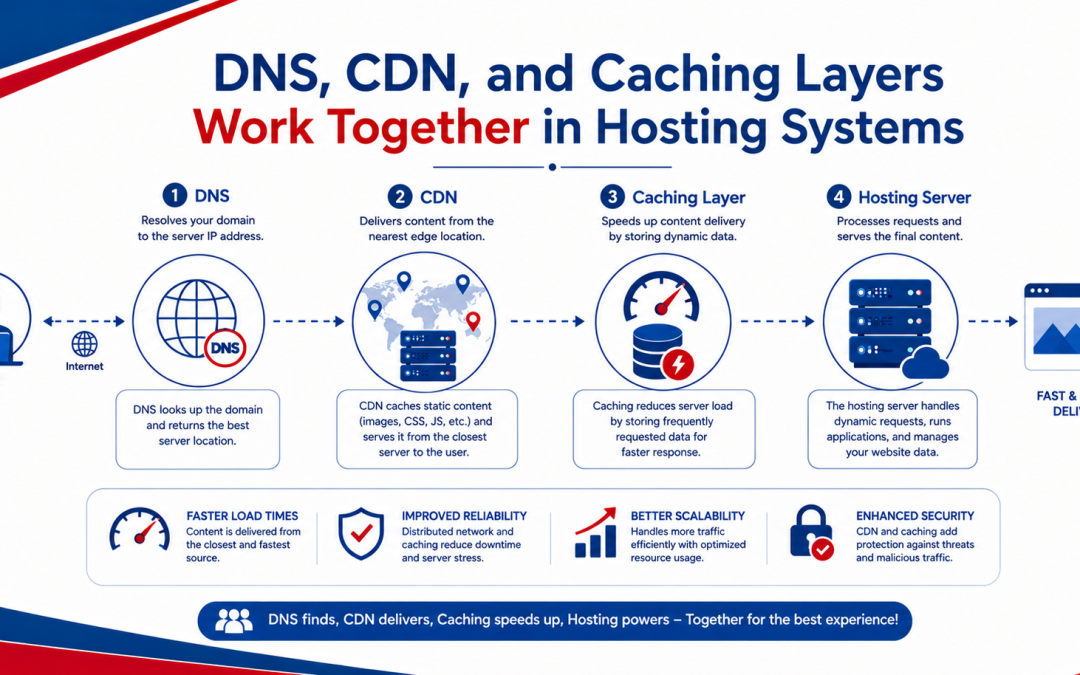
In today’s digital world, websites need to stay online all the time. Even a few minutes of downtime can lead to lost customers, reduced trust, and lower revenue. This is where high-availability hosting comes in. It is a hosting setup designed to ensure that a website or application remains accessible even when something goes wrong.
High-availability hosting uses multiple systems, servers, and backup resources to keep websites running smoothly. If one server fails, another instantly takes over. This reduces downtime and keeps services available 24/7.
How High-Availability Hosting Works
High-availability hosting works through a combination of advanced technologies that support continuous operation. The main idea is redundancy, meaning there is more than one system handling the same task.
For example, instead of relying on a single server, high-availability systems use multiple servers connected together. This setup often includes:
- Load balancing: Traffic is distributed evenly across servers so no single server gets overloaded.
- Failover systems: If one server fails, another automatically takes over without interrupting the website.
- Data replication: Website data is copied in real-time across multiple servers or data centers.
This structure ensures that even if hardware fails, the website continues running without noticeable disruption to users.
Key Features That Prevent Downtime
The main goal of high-availability hosting is to eliminate single points of failure. To achieve this, hosting providers implement several important features:
- Server Redundancy
Multiple servers work together so that if one crashes, others continue handling requests. - Geographic Distribution
Servers are placed in different locations. If one data center goes offline due to a natural disaster or power failure, others remain active. - Automatic Failover Systems
These systems detect failures instantly and switch traffic to a backup server without manual intervention. - Continuous Monitoring
Hosting systems are monitored 24/7 to detect issues early and fix them before they cause downtime.
These features work together to ensure maximum uptime, often reaching 99.9% or higher reliability.
Benefits of High-Availability Hosting
High-availability hosting offers several advantages for businesses and website owners:
- Improved website uptime and reliability
- Better user experience with no interruptions
- Increased trust and credibility
- Protection against hardware or software failures
- Scalability to handle traffic spikes
For businesses, even a few minutes of downtime can result in lost sales and customer dissatisfaction. High-availability hosting helps prevent these losses by keeping websites online continuously.
Additionally, it supports cloud hosting environments, which makes scaling resources easier and more cost-effective.
High-availability hosting is essential for any website that values uptime, performance, and reliability. By using multiple servers, load balancing, failover systems, and real-time data replication, it ensures that websites stay online even during unexpected failures.
Whether you run an online store, a blog, or a business website, investing in high-availability hosting can significantly reduce downtime and improve user satisfaction. In a competitive digital landscape, staying online is not optional—it is a necessity.