
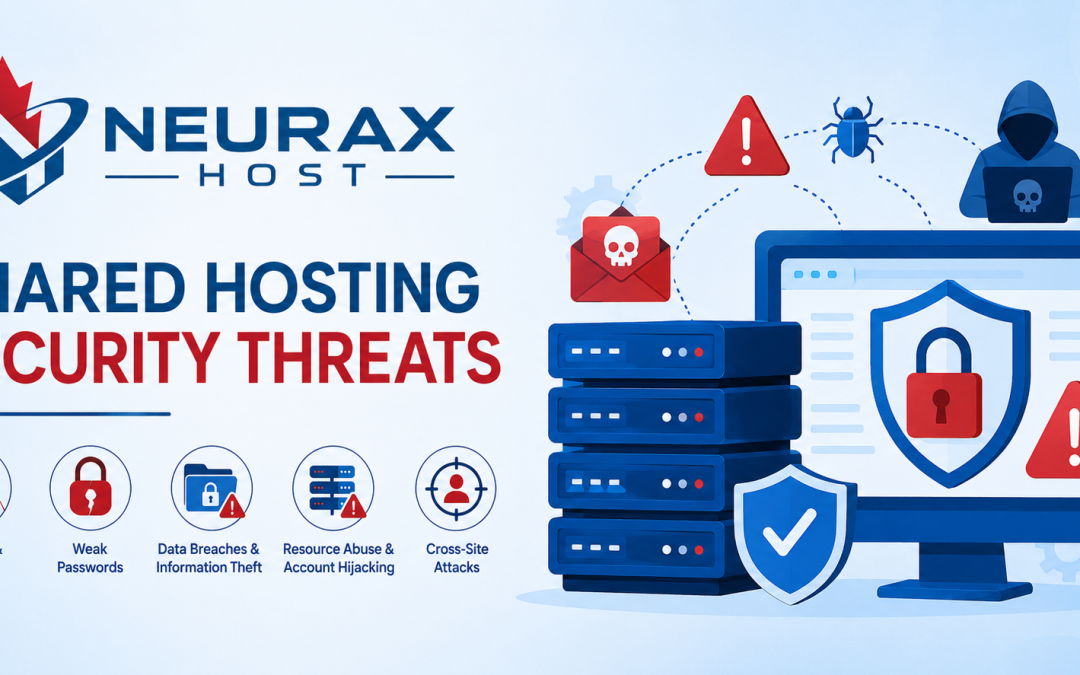
Shared hosting is an excellent option for newbies and small businesses as it is cost-effective and manageable. However, because several sites are hosted on the same server, it can experience security threats such as malware attacks, data theft, authentication vulnerabilities, and resource misuse. Such problems lead to website downtime, decrease in server performance as well as loss of user trust. Through security best practices like firewall defense, SSL certification, regular malware checks, and fortifying the server, you can ensure the safety of your shared hosting environment efficiently and securely.
Comparison Table: Security Threats vs Prevention in Shared Hosting
| Security Threat | Impact on Website | Prevention Method | Technical Benefit |
| Malware Infection | Website defacement, data loss | Regular malware scanning + antivirus tools | Improves server integrity |
| Weak Passwords | Unauthorized access | Strong passwords + 2FA authentication | Enhances account security |
| DDoS Attacks | Website downtime | Firewall + CDN protection | Reduces traffic overload |
| Outdated Software | Security vulnerabilities | Regular updates + patch management | Fixes known exploits |
| Cross-Site Contamination | Shared server risk | Isolated hosting environment | Improves account isolation |
| Brute Force Attacks | Login hacking attempts | Login limit + CAPTCHA | Blocks automated attacks |
| Data Breaches | Sensitive data exposure | SSL encryption + secure protocols | Protects data transfer |
| Resource Abuse | Slow performance | CPU monitoring + resource limits | Ensures stable performance |
Malware and Virus Attacks in Shared Hosting
A malware infection is probably one of the biggest dangers in a shared hosting setup. Hackers might be able to embed malicious code in vulnerable websites. The infection can then spread to other accounts on the same server. It compromises both server integrity and website uptime.
You can avoid this by continuously scanning your site for malware, using security plugins, and having backups. You can also protect your site with a firewall that can prevent malicious traffic from entering. Along with that, users of the hosting should not be installing plugins or themes that are potentially dangerous to their sites.
Weak Authentication and Unauthorized Access
Weak passwords are a very common cause of compromised hosting accounts. An attacker can use automated tools to carry out brute force attacks and guess the login credentials. Once inside, they are able to delete files or steal data.
To avoid this, you should always choose strong passwords and activate two-factor authentication (2FA). You can also restrict login attempts and deploy CAPTCHA systems. All these moves greatly enhance account security and lower the risk of unauthorized access in shared hosting environments.
DDoS Attacks and Server Overload
DDoS (Distributed Denial of Service) is an attack that involves a website getting flooded with fake visitors. It results in the site becoming either very slow or inaccessible. Because resources are shared, shared hosting servers face greater risks.
To stop this from happening, get CDN protection that splits the traffic around the world and lessens the burden on the main server. A tough web application firewall (WAF) can recognize and block bad traffic as well. These instruments help maintaining uptime reliability and allow you to have smooth operation even during sudden increases in traffic.
Software Vulnerabilities and Resource Abuse
Using software that is no longer supported or is out of date is by far the simplest method for hackers to break into shared hosting systems. Old and unsupported plugins, themes, or CMS versions may have security holes. This could lead to unauthorized access to data or even more serious problems with the performance of your site.
On a regular basis, make sure you are applying the latest updates and patches. Also, perform server hardening and keep a close eye on the CPU usage to prevent resources being overused. Allocating resources properly is the key to one site not being able to negatively affect others on the same server in terms of performance.
Shared hosting is cost-effective, but it requires strong security practices. By using tools like SSL encryption, firewall protection, malware scanning, and regular updates, you can reduce risks significantly. Understanding these threats and applying preventive measures ensures better server security, stable uptime performance, and a safer experience for your website visitors.