
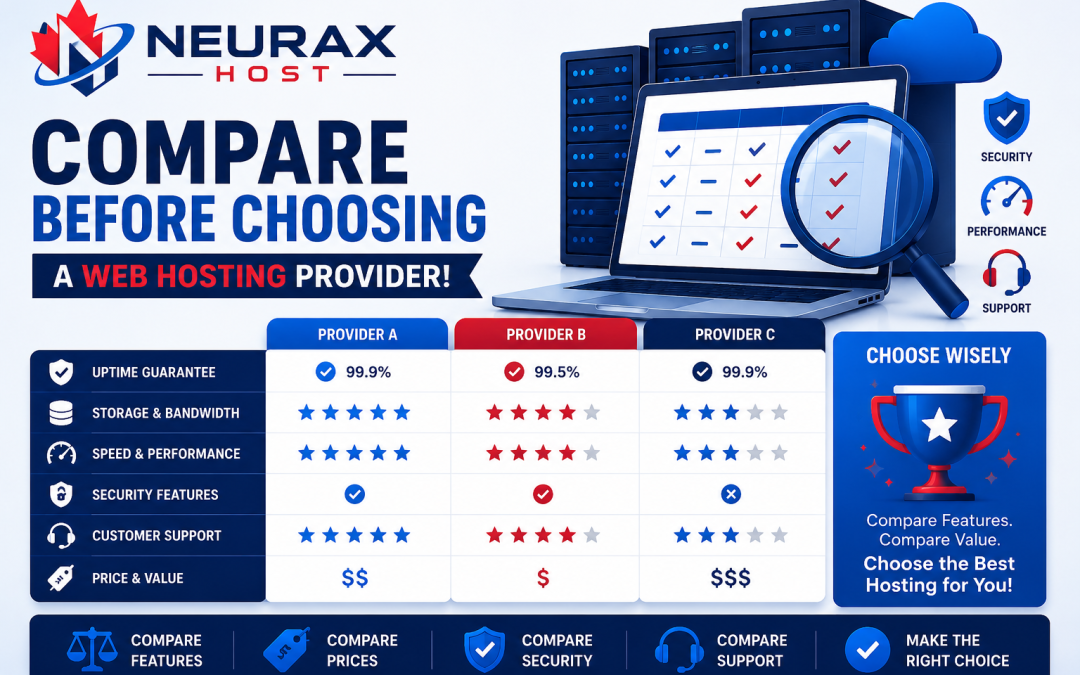
Choosing a web hosting provider is one of the most important decisions for your website. Many people compare only the price and buy the cheapest plan. Later, they face slow loading speed, website downtime, security issues, or poor customer support. When these problems happen, the website becomes stressful instead of helpful.
The good news is that you do not need technical knowledge to choose good hosting. You only need to compare a few important things that directly affect your website’s speed, safety, and growth. In this article, I will explain these points in a very simple and practical way. The goal is not to confuse you with technical terms. The goal is to help you make a smart decision that saves time, money, and future frustration.
Quick Comparison Table
| What to Compare | Why It Matters | Better Choice |
| Storage type | Faster website loading | NVMe or SSD |
| Uptime | Website stays online | 99.9% or higher |
| Customer support | Quick help during problems | 24/7 support |
| Free SSL | Trust and security | Included free |
| Backups | Recover lost data | Daily automatic backups |
| Scalability | Handle future traffic | Easy upgrade |
| Renewal price | Avoid hidden costs | Clearly mentioned |
Compare Website Speed Before Anything Else
When visitors open your website, speed creates the first impression. If the site loads slowly, many people leave before reading your content or checking your products. This is why speed should be the first thing you compare.
A good hosting provider usually offers SSD or NVMe storage, optimized servers, and caching technology. These features may sound technical, but their benefit is simple: your website opens faster.
Imagine two websites selling the same product. One loads in two seconds and the other in six seconds. Most visitors will stay on the faster website. Google also prefers faster websites, so speed can improve both user experience and search rankings.
For a beginner, the easiest rule is this: choose hosting that clearly mentions NVMe or SSD storage and performance optimization. You do not need the most expensive plan. You only need hosting that is built for speed.
Check Uptime and Reliability
Uptime means how often your website stays online. A hosting provider with 99.9% uptime is generally considered reliable. If your website goes offline frequently, visitors may lose trust in your business.
This is especially important for business websites, online stores, and service websites. Even a short period of downtime can mean lost customers and lost revenue.
Before buying, read the provider’s uptime policy. A professional company usually shows its uptime guarantee clearly. If the information is hidden or difficult to find, that is a warning sign.
Reliable hosting is like a shop that keeps its doors open. Customers can visit whenever they need you.
Customer Support Can Save Your Website
Many people realize the value of support only when something goes wrong. A plugin update may break the website, an email may stop working, or the site may suddenly become inaccessible.
In such situations, fast and helpful support is extremely important.
Good support is not just about being available 24/7. It is about giving clear and useful answers. Before purchasing, you can test the support team by asking a simple question through live chat. The way they respond often tells you what kind of experience you will get later.
A hosting company with excellent support can save hours of stress. For beginners, this feature is often more valuable than extra storage or unlimited features.
Do Not Ignore Security Features
Website security is not only for large companies. Small websites are often targeted because they are easier to attack.
A good hosting provider should include free SSL, firewall protection, malware scanning, and automatic backups. These features protect both your website and your visitors.
SSL is especially important because browsers may show a “Not Secure” warning without it. This can reduce trust immediately.
Backups are equally important. If your website crashes after an update, a recent backup allows you to restore everything quickly. Without backups, you may lose important content, customer information, or business data.
Think of security as insurance for your website. You hope you never need it, but when a problem happens, it becomes priceless.
Compare Renewal Price and Future Growth
This is where many beginners make a costly mistake. A hosting plan may look very cheap for the first year, but the renewal price can be much higher.
Always check both the introductory price and the renewal price. Also see whether backups, email hosting, or migration are included or charged separately.
Another important question is whether the hosting can grow with your website. Today you may have a small blog, but in the future you may receive thousands of visitors. A good provider allows easy upgrades to better plans without moving the website manually.
Choosing scalable hosting now can prevent a difficult migration later.
Which Hosting Is Best for You?
The best hosting depends on your goal. A personal blog usually works well on quality shared hosting. A business website benefits from faster and more reliable hosting. An online store needs strong security and better performance. A growing website may eventually require cloud or VPS hosting.
Do not choose hosting because of flashy advertisements or huge “unlimited” claims. Choose the provider that solves your current problem and supports your future growth.
Choose Hosting for Long-Term Success
Before choosing a web hosting provider, compare speed, uptime, support, security, backups, scalability, and renewal cost. These factors have a much bigger impact on your website than the discount shown on the homepage.
If your website loads fast, stays online, remains secure, and receives quick support when needed, you have already made a strong hosting decision.
A good hosting provider is not just a place to store files. It becomes the foundation of your website’s performance, visitor experience, and long-term success. Spending a little time comparing the right things today can save you many hours of frustration tomorrow and help you build your website with confidence.