
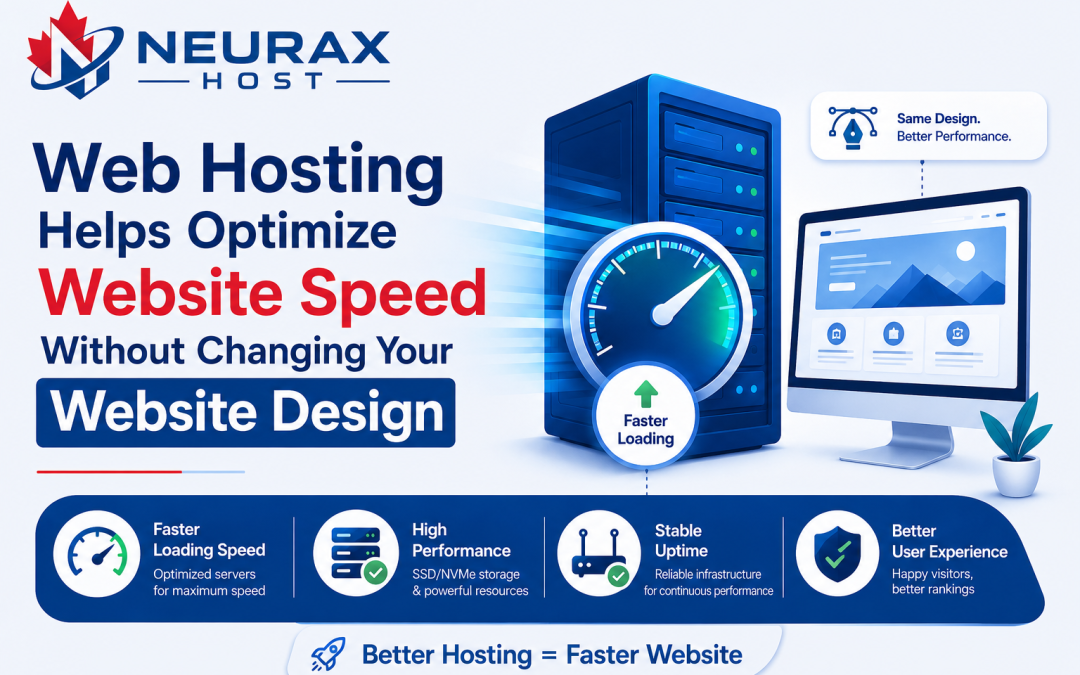
Website speed plays a major role in user experience, search engine rankings, and online conversions. Many website owners think they need a complete redesign to improve loading times. In reality, the hosting environment often has a much bigger impact on website performance than the visual design. Slow servers, outdated hardware, and limited resources can delay page loading even if your website is well-built. Upgrading to a faster and more reliable web hosting plan can significantly improve speed without changing your website layout, colors, or content. This guide explains how web hosting improves website speed, which hosting features matter most, and how choosing the right hosting solution helps create a faster browsing experience.
Why Better Web Hosting Improves Website Speed
Before making design changes, it is important to understand how your hosting provider affects performance. The table below highlights the key hosting features that improve website speed without requiring any design modifications.
| Web Hosting Feature | How It Improves Website Speed | Benefit for Your Website |
| SSD or NVMe Storage | Reads and writes data much faster than traditional drives | Faster page loading |
| Built-in Caching | Stores frequently used content for quicker delivery | Reduces loading time |
| Content Delivery Network (CDN) | Delivers files from servers closer to visitors | Improves global website speed |
| Latest PHP Version | Processes website code more efficiently | Faster server response |
| Optimized Server Resources | Provides adequate CPU and RAM | Handles more visitors smoothly |
| HTTP/3 Support | Improves data transfer between browser and server | Faster and more reliable connections |
| LiteSpeed or NGINX Servers | Processes requests more efficiently than older servers | Better website performance |
| High Uptime Infrastructure | Keeps servers stable and responsive | Consistent website availability |
A fast hosting environment removes many performance bottlenecks before the website even reaches a visitor’s browser.
Faster Servers Process Website Requests More Efficiently
Every time someone visits your website, the hosting server processes multiple requests before displaying the page. It retrieves files, loads images, connects to the database, and runs website applications. Older or overloaded servers take longer to complete these tasks, causing noticeable delays. Modern web hosting providers use high-performance processors, faster storage, and optimized server software to reduce processing time.
For WordPress websites, WooCommerce stores, blogs, and business websites, improved server performance often delivers faster loading speeds without changing the website’s appearance. Choosing hosting with LiteSpeed, NGINX, or optimized Apache servers can further improve website responsiveness.
Better Hosting Uses Advanced Speed Technologies
Modern web hosting includes technologies specifically designed to improve loading speed automatically. Built-in caching stores frequently accessed website files so the server does not need to recreate them every time someone visits your website. This reduces server workload and improves page delivery.
Content Delivery Networks (CDNs) store copies of your website across multiple locations worldwide. When visitors access your website, content is delivered from the nearest server instead of one distant location. This lowers latency and speeds up loading times. Many hosting providers also support HTTP/3, GZIP or Brotli compression, and the latest PHP versions, which improve communication between the browser and server while reducing file transfer times. These improvements happen in the hosting environment, so your website design remains exactly the same.
Better Resource Management Improves Performance During Traffic Spikes
Many websites perform well during normal traffic but slow down when visitor numbers increase. Shared servers with limited resources often struggle during busy periods. When multiple websites compete for CPU, memory, and bandwidth, loading times increase.
Quality web hosting provides better resource allocation through:
- Scalable CPU and RAM
- Balanced server workloads
- Faster database processing
- Optimized bandwidth management
Cloud hosting, VPS hosting, and premium shared hosting plans are designed to handle higher traffic volumes while maintaining fast website performance. This means your visitors enjoy a smooth browsing experience even during promotions, product launches, or seasonal traffic increases.
Website Speed Also Improves SEO and User Experience
Search engines reward websites that provide better user experiences. Website speed is one of the many factors that can influence search visibility.
A faster website often leads to:
- Lower bounce rates
- Longer visitor sessions
- Higher customer satisfaction
- Better mobile browsing experience
- Improved conversion opportunities
- Faster page indexing by search engines
Visitors are also more likely to trust websites that load quickly. Whether users are reading blog posts, shopping online, or completing contact forms, faster loading creates a smoother experience that encourages engagement. While speed alone cannot guarantee higher rankings, combining quality web hosting with good SEO practices creates a stronger technical foundation.
How to Choose Web Hosting for Better Website Speed
If your website feels slow despite optimized images and clean website code, it may be time to evaluate your hosting provider.
When selecting faster web hosting, look for these essential features:
- SSD or NVMe storage
- LiteSpeed or NGINX web servers
- Built-in server caching
- Free Content Delivery Network (CDN)
- Latest PHP support
- HTTP/3 compatibility
- High uptime guarantee
- Scalable server resources
- Reliable technical support
- Automatic performance monitoring
These hosting features work together to improve website speed without requiring expensive website redesigns or major development work.
Improving website speed does not always require changing your website design. In many cases, the hosting provider has a greater influence on loading performance than the visual layout itself. Modern web hosting uses faster servers, SSD or NVMe storage, built-in caching, CDN integration, optimized server software, and scalable resources to deliver pages more efficiently. These improvements help reduce loading times, improve user experience, and support better SEO performance while keeping your existing website design unchanged. Choosing a reliable web hosting provider is one of the simplest and most effective ways to optimize website speed and create a faster, more dependable experience for every visitor.