
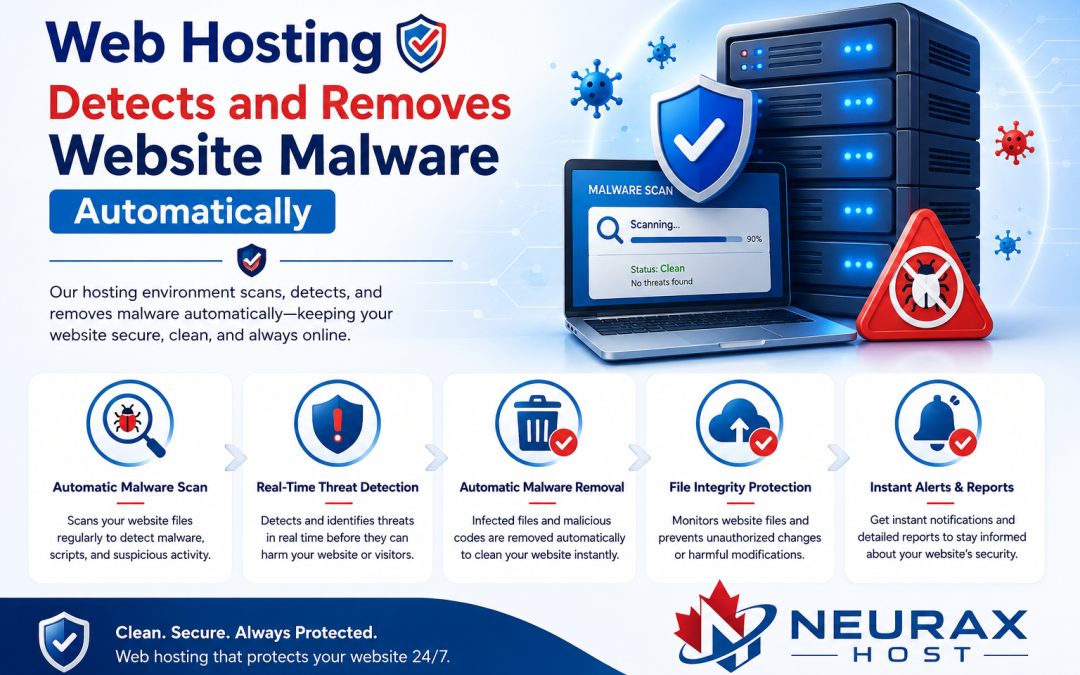
Website malware is one of the biggest threats on the internet today. It can steal customer information, damage your website, slow down loading speed, and even stop visitors from reaching your pages. Many website owners believe they are safe because they use strong passwords or security plugins. However, modern cyber threats have become much smarter. They often hide inside website files before anyone notices.
This is why smart web hosting security has become more important than ever. Smart web hosting does not simply store your website. It also watches your website day and night. It detects suspicious activity, blocks dangerous files, and removes malware automatically before serious damage happens.
When your hosting provider uses real-time malware scanning, AI-powered threat detection, server security, and automatic malware removal, your website stays protected without constant manual work. As a result, visitors trust your business, your website stays online, and search engines continue viewing your website as safe.
| Common Malware Problem | Modern Hosting Solution |
| Hidden malware files | Real-time malware scanning |
| Harmful file uploads | Automatic file scanning |
| Suspicious website activity | AI-powered threat detection |
| Malware spreading across files | Automatic malware isolation |
| Website downtime | Fast malware removal and recovery |
How Does Smart Web Hosting Detect Website Malware?
Hackers rarely attack websites by accident. Instead, they search thousands of websites looking for weak passwords, outdated software, or vulnerable plugins. Once they find an opening, they quietly place malicious code inside website files.
Modern web hosting looks for these threats before they become dangerous. Every file uploaded to the server is checked automatically. Hosting security systems compare files against known malware signatures. At the same time, AI security tools watch for unusual behavior that may not match older attack patterns.
For example, if a file suddenly begins changing other website files or sends unexpected requests, the hosting server recognizes that something is wrong. Instead of waiting for damage, it immediately starts investigating the suspicious activity.
Many hosting providers also use continuous server monitoring. This means the server checks websites every minute instead of only during scheduled scans. Because of this constant monitoring, threats are often detected within minutes. This early detection helps stop malware before customers ever notice a problem.
When Does Automatic Malware Removal Begin?
Many website owners think malware removal starts after someone reports a problem. Smart web hosting works very differently. Automatic malware protection begins as soon as your website is placed on a secure hosting server. Every visitor request, software update, uploaded image, and new website file can be scanned for suspicious behavior.
If dangerous code appears, the hosting system quickly separates the infected file from the rest of the website. This process prevents malware from spreading into important files or customer data. Some advanced hosting platforms even clean infected files automatically. If a file cannot be repaired safely, it is removed before hackers can use it.
At the same time, clean website files continue working normally. Therefore, visitors often never realize an attack was attempted. Regular server backups provide another important layer of protection. If malware changes important website files, the hosting provider can restore a clean version quickly. This reduces downtime and helps businesses return online faster. The faster malware is removed, the smaller the damage becomes.
Why Hosting-Level Malware Protection Works Better Than Plugins
Website security plugins are useful, but they cannot protect everything. Most plugins begin checking your website only after visitors reach your website. By then, some attacks may already be happening.
Hosting-level security works much earlier. Every visitor request first passes through the hosting server. Before any traffic reaches WordPress or another content management system, the server checks whether the request is safe. Modern hosting providers combine several protection systems together.
A Web Application Firewall (WAF) blocks dangerous traffic before it reaches your website. Real-time malware scanning checks website files continuously. AI-powered security learns new attack methods. Automatic security updates close known software weaknesses. Server hardening makes it harder for hackers to enter. DDoS protection filters fake traffic before it overloads your website. Because these security layers work together, hackers have far fewer chances to succeed.
Another advantage is website performance. Malicious traffic uses server resources. When hosting blocks dangerous requests early, your website has more resources available for real visitors. As a result, pages load faster and customers enjoy a better experience. This combination of speed and security creates stronger customer confidence while improving overall website reliability.
Why Automatic Malware Protection Builds Customer Trust
Website security is not only about technology. It also protects your business reputation. Imagine a customer visits your website and sees a browser warning saying the website may not be safe. Most visitors immediately leave. Many never return. Search engines also monitor website safety. Malware infections can reduce search rankings or display security warnings that discourage future visitors.
Automatic malware detection helps prevent these situations. Because threats are discovered early, websites stay clean more often. Customers continue shopping, reading, or contacting your business without interruption. Secure hosting also protects valuable customer information. Login details, payment information, contact forms, and personal data stay much safer when hosting security blocks malware before it reaches sensitive files.
Businesses also save time. Instead of spending hours searching for hidden malware, website owners can focus on serving customers and growing their business. Hosting security handles much of the protection automatically in the background. Today, customers expect secure websites. Businesses that invest in advanced hosting-level security show they care about protecting both their website and their visitors. That trust often leads to stronger customer relationships and better long-term business growth.
Protect Your Website Before Malware Causes Serious Damage
Waiting until malware infects your website is always more expensive than preventing it. Modern web hosting provides a proactive security system that watches your website every hour of every day. It detects suspicious behavior, removes harmful files automatically, blocks new cyber threats, and helps keep your website online even when attacks occur.
Choosing secure web hosting means building your website on a stronger and safer foundation. Instead of reacting after damage happens, your hosting works continuously to stop malware before it becomes a costly problem.
Why Secure Hosting with Automatic Malware Protection Matters:
- Stay One Step Ahead of Hackers with real-time malware monitoring that detects threats before they can harm your website.
- Stop Malware Before It Spreads with automatic removal tools that clean harmful files quickly and keep your website safe.
- Block Dangerous Traffic Automatically using AI-powered security systems and Web Application Firewalls that filter suspicious requests.
- Protect Your Website Reputation by keeping customer data secure, improving website performance, and maintaining search engine trust.
- Enjoy Reliable Website Protection with reduced downtime, stronger security, and peace of mind while your business grows.