
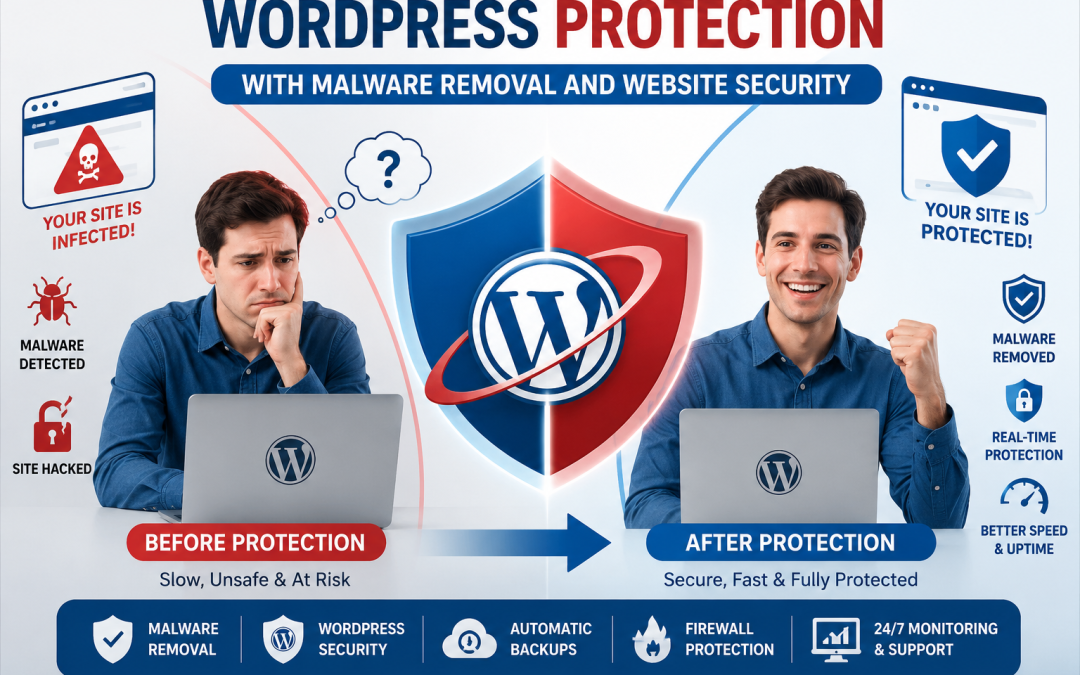
A WordPress website is like a digital home for your ideas, business, or online store. Just like a home needs locks and safety rules, a website needs protection from online dangers. Today, many website owners face problems like hacking attempts, harmful software, and website downtime. These problems can make visitors lose trust and can hurt a business.
The good news is that website security does not have to be difficult. With the right web hosting, strong malware protection, and proper malware removal steps, WordPress websites can stay safer and perform better. Experts recommend taking action before problems happen. A secure website uses smart tools, safe habits, and trusted services to protect information and visitors.
In this guide, we will learn simple ways to protect a WordPress website and understand why expert-recommended security practices matter.
Why WordPress Protection Is Important for Every Website
WordPress is one of the most popular platforms for creating websites. People use it for blogs, online stores, business websites, and many other projects.
Because so many people use WordPress, it can also become a target for online attacks. Hackers may try to enter websites through weak passwords, old software, unsafe plugins, or harmful files.
A website with poor security may face many problems. It may become slow, show unwanted messages, or stop working completely. In some cases, visitors may receive warnings that the website is unsafe.
These issues can damage a website’s reputation. Visitors want to feel safe when they browse a website or share information.
Experts recommend solving security problems before they become serious. Regular updates, safe website habits, and reliable web hosting can reduce many common risks.
Website protection is not only about fixing problems. It is about building a safe experience for every visitor.
A secure website helps businesses grow, keeps information safer, and creates long-term trust with users.
How Web Hosting Helps Protect WordPress Websites
Choosing the right web hosting service is one of the first steps toward better website security.
Web hosting is where your website files and data are stored. A good hosting provider gives your website a safe place to run and helps keep it available for visitors.
Many people think web hosting only affects website speed, but it also plays an important role in security.
Reliable web hosting can provide features like:
- Website backups
- Server monitoring
- Security checks
- Protection against harmful traffic
- Technical support
These features help website owners handle problems faster.
For example, if a website suddenly stops working, a backup can help restore important information. If unusual activity appears, monitoring tools can help identify possible risks.
Today, some hosting providers are also using AI web hosting technology. AI tools can study website activity and notice unusual patterns. They may help detect possible threats earlier and support faster responses.
However, technology alone is not enough. Experts recommend combining smart tools with good website practices. Human knowledge and experience are still important for making the right security decisions.
A trusted web hosting service creates a strong base for WordPress safety.
Malware Protection: Keeping Your Website Safe From Threats
Malware is harmful software that can damage a website, steal information, or create unwanted changes.
Strong malware protection helps prevent these problems by watching for suspicious activity and blocking possible threats.
Experts recommend using multiple safety steps instead of depending on only one tool.
Important malware protection habits include:
- Using strong passwords
- Updating WordPress regularly
- Installing trusted plugins and themes
- Checking website files often
- Keeping regular backups
Many malware problems happen because of small mistakes. For example, downloading unknown files or using outdated software can create security risks.
Security tools can scan websites and look for harmful changes. If something unusual is found, website owners can take action before the damage becomes bigger.
Good malware protection also helps protect visitors. When people know a website is secure, they feel more comfortable browsing, shopping, or sharing information.
Experts believe prevention is always better than waiting for a serious problem. A protected website saves time, money, and effort in the long run.
Why Malware Removal Should Be Done Carefully
Even with good protection, a website may sometimes become infected. When this happens, quick and careful action is needed.
Malware removal means finding harmful software and removing it from a website. The goal is to clean the website and make it safe again.
Some website owners try random solutions from the internet. This can make the problem worse because malware can hide in different parts of a website.
Professional malware removal usually follows clear steps:
- Finding infected files
- Removing harmful code
- Checking website security issues
- Updating weak areas
- Testing the website after cleaning
Experts do not only remove the problem. They also look for the reason behind the attack.
For example, if an old plugin caused a security problem, updating or replacing it can help prevent the same issue from happening again.
Reliable malware removal requires experience and knowledge. Security experts understand common threats and use trusted methods to protect websites.
A clean website helps restore visitor confidence and protects the website owner’s reputation.
Expert Tips for Strong WordPress Website Security
Keeping a WordPress website safe does not require complicated steps. Simple actions can make a big difference.
Experts recommend following these security tips:
Keep WordPress updated:
Updates often fix security problems and improve website performance.
Use safe plugins and themes:
Only install tools from trusted sources. Unknown files may contain hidden risks.
Create backups regularly:
Backups provide a safety copy of your website. They can help recover information if something goes wrong.
Protect login details:
Use strong passwords and avoid sharing login information.
Choose secure web hosting:
A reliable hosting provider can offer important security features and support.
Check your website often:
Regular checks can help find unusual changes quickly.
These steps follow the main ideas of trustworthy website security: experience, expertise, authoritativeness, and trustworthiness.
Experienced professionals understand real website problems. Experts use proven methods. Trusted information helps users make better choices. These qualities create confidence between websites and visitors.
Building a Safer WordPress Future With Trusted Security
Website security is not a one-time task. It requires regular care and attention.
As online threats continue to change, website owners need better tools and smarter solutions. Secure web hosting, malware protection, and effective malware removal work together to create stronger website safety.
AI web hosting is becoming a helpful part of modern website security. It can support faster monitoring, identify unusual activity, and help website owners respond quickly.
Still, the most important part of website security is making smart decisions. Using trusted services, following expert advice, and protecting visitor information should always be the main goals.
A secure website builds trust. Visitors are more likely to return to websites that feel safe and reliable.
By choosing the right web hosting, maintaining strong malware protection, and using professional malware removal when needed, WordPress website owners can protect their online presence.
Website security is not just about technology. It is about creating a safe and trusted experience for everyone who visits your website.