
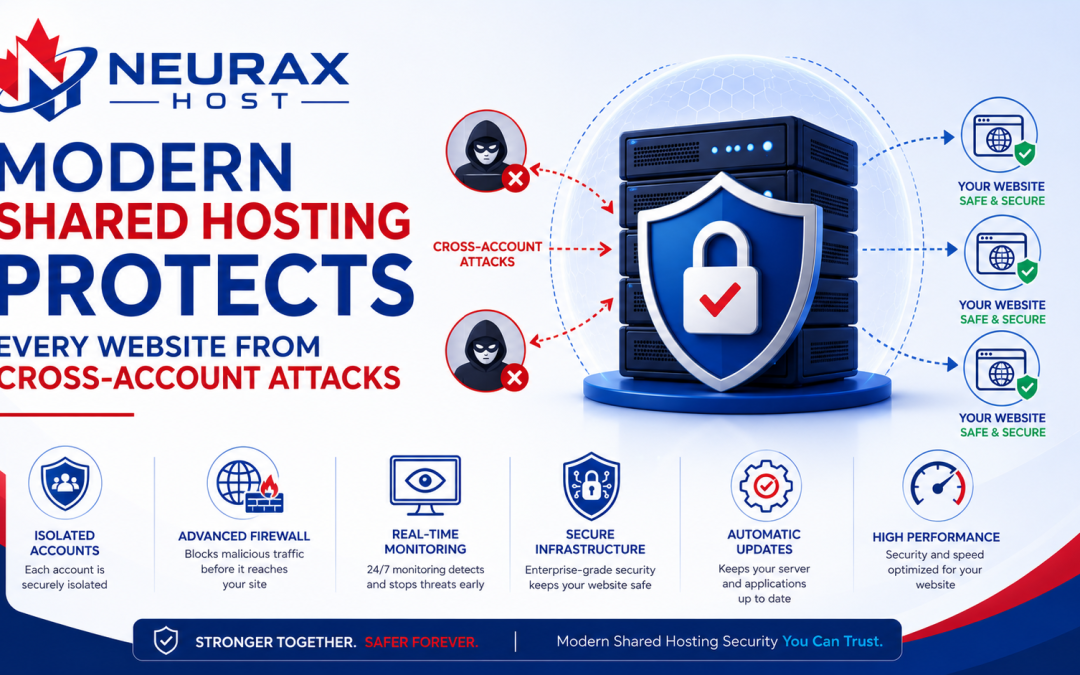
Shared hosting is one of the most common hosting choices for website owners because it provides an affordable way to start and grow an online presence. Small businesses, bloggers, startups, and many growing companies use shared hosting because it offers reliable performance without the high cost of dedicated servers.
However, many people still have one important question: Can one website on a shared server affect another website?
This concern comes from older shared hosting environments where security systems were not as advanced as today. In the past, if one website had weak security, attackers could sometimes try to move between accounts on the same server. This type of threat is known as a cross-account attack.
Modern shared hosting has changed completely. Today, secure hosting providers use advanced server protection, account isolation, malware scanning, firewalls, and continuous monitoring to protect websites from these risks.
The goal of modern shared hosting is simple: allow multiple websites to share server resources while keeping every account protected and separated.
| Security Challenge | Risk to Website | Modern Hosting Protection |
| One infected website | Malware may spread | Account isolation limits access |
| Weak server security | Unauthorized access | Firewall and monitoring systems |
| Suspicious file activity | Website damage | Malware scanning and alerts |
What Are Cross-Account Attacks and Why Do They Matter?
A cross-account attack happens when an attacker tries to use a weakness in one hosting account to access another account on the same server. Since shared hosting allows multiple websites to use the same server resources, security separation becomes extremely important.
Think about a large apartment building. Many families live in the same building, but every apartment has its own lock, security system, and private space. If one apartment has a problem, strong security measures help stop it from affecting everyone else.
Modern shared hosting follows the same idea. Websites may share server resources, but advanced security systems create barriers between accounts.
Hackers usually target websites with outdated software, weak passwords, insecure plugins, or poor website management. They do not always attack large companies. Automated tools scan thousands of websites every day looking for simple security mistakes.
This is why website security cannot depend only on website owners. The hosting environment also plays a major role in preventing cyber threats.
| Cross-Account Risk | How Modern Hosting Handles It | Website Benefit |
| Unauthorized account access | Account separation technology | Better website protection |
| Malware infection attempts | Security scanning tools | Faster threat detection |
| Server-based attacks | Firewall protection | Reduced security risks |
How Modern Shared Hosting Blocks Cross-Account Attacks
Modern shared hosting protects websites by adding multiple security layers at the server level. These systems work continuously in the background to identify and block suspicious activities.
One of the most important security features is account isolation. This technology creates boundaries between different hosting accounts. Even though several websites use the same server, one account cannot easily access another account’s files or important information.
For example, imagine one website on a shared server gets infected because of an outdated plugin. In an old hosting environment, the infection could create more risk. In a modern hosting environment, security barriers help contain the problem and reduce the chance of it spreading.
Hosting providers also use web application firewalls, malware scanners, login protection, and server monitoring systems. These tools check website activity and detect unusual behavior before it becomes a serious issue.
Modern shared hosting also includes features like automatic backups and secure server configurations. These features help website owners recover faster if unexpected problems happen.
The biggest advantage is prevention. Instead of waiting for a website to be damaged, modern hosting focuses on stopping threats before they create major problems.
When Should You Choose Secure Shared Hosting?
Many people believe shared hosting is only suitable for small websites with limited needs. However, modern shared hosting has improved significantly and can support many types of websites.
Business websites, blogs, portfolio websites, startup websites, and online stores can benefit from secure shared hosting when the hosting environment is properly managed.
The important point is choosing the right hosting provider. Not every shared hosting service offers the same level of protection. Website owners should look for providers that invest in modern security technology.
A secure hosting environment helps protect website files, customer information, and business reputation. This is especially important because even a short security issue can reduce customer trust and affect online visibility.
For example, if an online store becomes infected with malware, customers may avoid making purchases. Search engines may also show warnings if a website is unsafe. Strong hosting security helps reduce these risks.
Modern cyber threats are constantly changing. Therefore, website owners need hosting solutions that are designed for today’s security challenges, not outdated protection methods.
Benefits of Modern Shared Hosting Security
Modern shared hosting provides a strong combination of affordability, performance, and protection. It allows website owners to enjoy professional hosting features without paying the high cost of advanced server solutions.
Secure shared hosting improves website reliability because security systems continuously monitor server activity. It also reduces downtime by helping detect and prevent harmful actions.
Another major benefit is easier website management. Many security processes happen automatically, so website owners do not need advanced technical knowledge to maintain basic protection.
Modern hosting technologies like NVMe storage, caching systems, optimized servers, SSL certificates, and performance monitoring also improve website speed and user experience.
A secure and fast website creates more trust. Visitors expect websites to load quickly and protect their information. A website that feels unsafe can quickly lose customers.
The real value of modern shared hosting is not only saving money. It is getting a secure foundation where websites can grow safely.
Why Modern Shared Hosting Is the Future of Website Protection
The old belief that shared hosting is unsafe is no longer accurate. The real issue is not sharing server resources. The real issue is using a hosting environment without proper security controls.
Modern shared hosting uses advanced technology to separate accounts, monitor threats, and protect websites from cross-account attacks. It creates multiple protection layers that work together.
The truth is that no hosting service can guarantee complete protection from every possible cyber attack. Security requires multiple steps, including good website management and responsible online practices. However, modern shared hosting greatly reduces risks by providing professional-level security at an affordable price.
A secure hosting provider works like a security team for your website. It watches for threats, protects your data, and helps keep your website available for visitors.
To improve your website security with shared hosting:
- Choose hosting with account isolation, malware scanning, and firewall protection.
- Keep WordPress, themes, and plugins updated regularly.
- Use strong passwords and enable extra login security.
- Select a hosting provider that offers backups and continuous monitoring.
Modern shared hosting proves that affordability and security can work together. When the right technology is used, multiple websites can safely share server resources without putting each other at unnecessary risk. A secure hosting environment is not just a place to store website files — it is a protection system that helps your website stay safe, trusted, and ready for future growth.