
Every website faces online attacks every day. Some hackers try to steal data. Others try to spread malware or break your website. Many website owners think they only need a strong password or a security plugin. However, that is not enough anymore. Modern cyber threats have become smarter and faster.
This is where hosting-level security makes a big difference. Good web hosting does not wait for hackers to enter your website. Instead, it stops many attacks before they even reach your files. This gives your website extra protection from the start.
When your hosting provider uses advanced security systems, your website stays safer, loads faster, and works better. As a result, visitors trust your website more. Search engines also prefer websites that stay secure and available. That is why hosting-level protection has become an important part of modern website security.
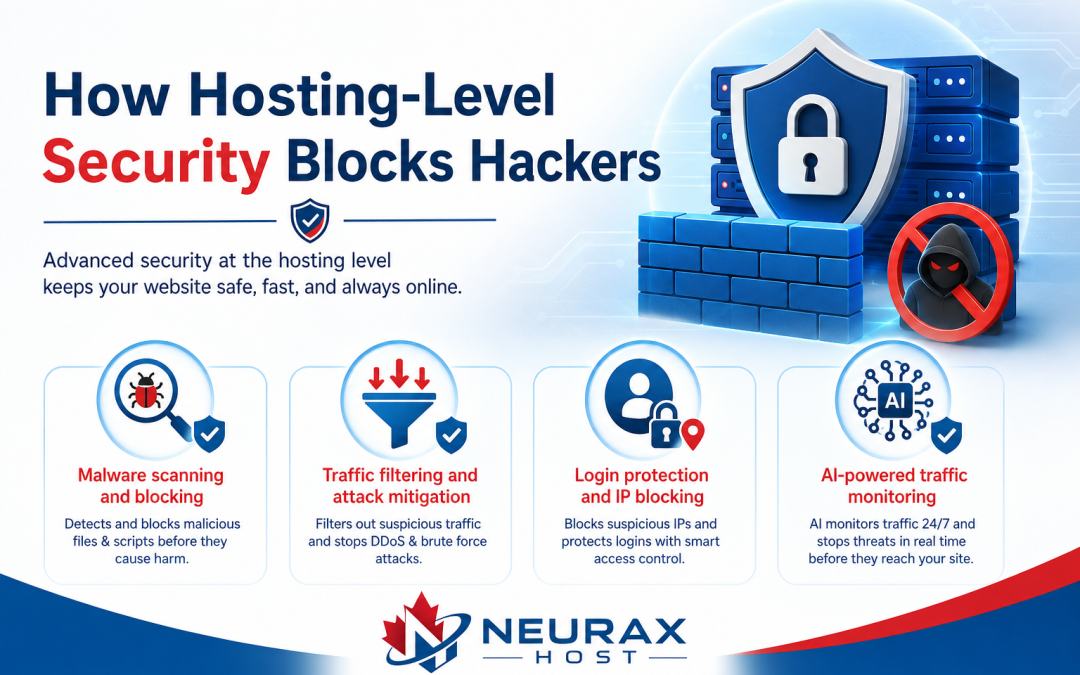
| Modern Security Threat | Hosting-Level Protection |
| Malware attacks | Malware scanning and blocking |
| DDoS attacks | Traffic filtering and attack mitigation |
| Brute-force login attempts | Login protection and IP blocking |
| Suspicious bots | AI-powered traffic monitoring |
| Server vulnerabilities | Automatic server updates and firewall protection |
Why Website Security Starts at the Hosting Server
Many people install security plugins after building their website. While plugins help, they protect only part of your website. Hosting-level security works much earlier. It watches every visitor before they can connect to your website. Think about a security guard standing outside a building. The guard checks everyone before they enter. In the same way, your hosting server checks website traffic before it reaches your WordPress files or database.
Modern hosting providers use several security layers together. They monitor incoming traffic every second. They compare visitor behavior with known attack patterns. If something looks dangerous, the request gets blocked immediately.
This approach reduces the chance of malware infections, stolen data, and website downtime. At the same time, real visitors continue using your website without interruption. Because protection happens at the server level, your website uses fewer resources to fight attacks. Therefore, your pages stay fast even during heavy traffic.
How Smart Hosting Detects Suspicious Activity Early
Hackers rarely attack only one website. They often scan thousands of websites looking for weak points. Modern hosting security watches these scans from the beginning. Today, many hosting companies use AI-powered security systems and real-time monitoring. These tools look for unusual behavior instead of waiting for damage to happen.
For example, if one IP address tries hundreds of login attempts within a few minutes, the server notices the unusual activity. Instead of allowing more attempts, it blocks the connection before hackers can guess passwords.
The same happens when malware tries to upload harmful files. Advanced malware detection scans uploaded files automatically. If the file looks dangerous, it never reaches your website. Hosting providers also study global cyber threat data. When a new attack appears somewhere in the world, security rules can be updated quickly. Because of this, your website receives protection against new threats without waiting for manual updates. This proactive security approach helps reduce risks before they become serious problems.
Multiple Security Layers Keep Your Website Safe
Modern website protection does not depend on one security tool. Instead, hosting companies build several protection layers that work together. The first layer often includes a web application firewall. This firewall checks every request before it reaches your website. Harmful traffic gets blocked immediately.
The next layer includes DDoS protection. During a DDoS attack, thousands of fake requests try to overload a website. Good hosting filters fake traffic while allowing real visitors to continue browsing normally. Automatic malware scanning adds another important layer. Files are checked regularly for hidden threats. If suspicious code appears, it can be isolated before spreading further.
Secure server updates also play a major role. Older software contains known weaknesses that hackers try to exploit. Reliable hosting providers install security patches quickly, reducing these risks. SSL certificates encrypt information between visitors and your website. As a result, sensitive data stays protected while moving across the internet.
Daily backups provide another safety net. Even if something unexpected happens, clean website copies can be restored quickly. This reduces downtime and prevents permanent data loss. Together, these security features create stronger protection than relying only on website plugins.
Why Secure Hosting Builds Trust and Supports Long-Term Growth
Website security is not only about blocking hackers. It also protects your business reputation. Visitors expect websites to work safely every time they visit. If they see warning messages or security problems, many leave immediately and may never return.
Search engines also pay attention to website safety. Websites infected with malware can lose rankings or even receive security warnings. As a result, fewer people discover the business online. Hosting-level security helps prevent these situations before they happen. Continuous monitoring, firewall protection, malware removal tools, server hardening, and real-time threat detection work together to keep websites healthy.
A secure hosting environment also improves website uptime. Customers can browse products, submit forms, and complete purchases without interruptions. This creates better user experiences and stronger customer confidence. For businesses, bloggers, online stores, and service providers, secure hosting becomes an investment rather than an expense. It protects valuable data while supporting website performance and long-term reliability.
Hosting-level security protects your website before hackers ever reach it. Instead of reacting after an attack, modern hosting stops many threats at the server level. This proactive approach reduces malware risks, blocks suspicious traffic, and keeps websites available for real visitors. Choosing secure web hosting means building a stronger foundation for your entire online presence.
Remember these key benefits:
- Blocks hackers before they reach your website.
- Detects suspicious activity using real-time monitoring.
- Prevents malware, brute-force attacks, and DDoS attacks.
- Protects customer data with multiple security layers.
- Improves trust, website uptime, and long-term business growth.