
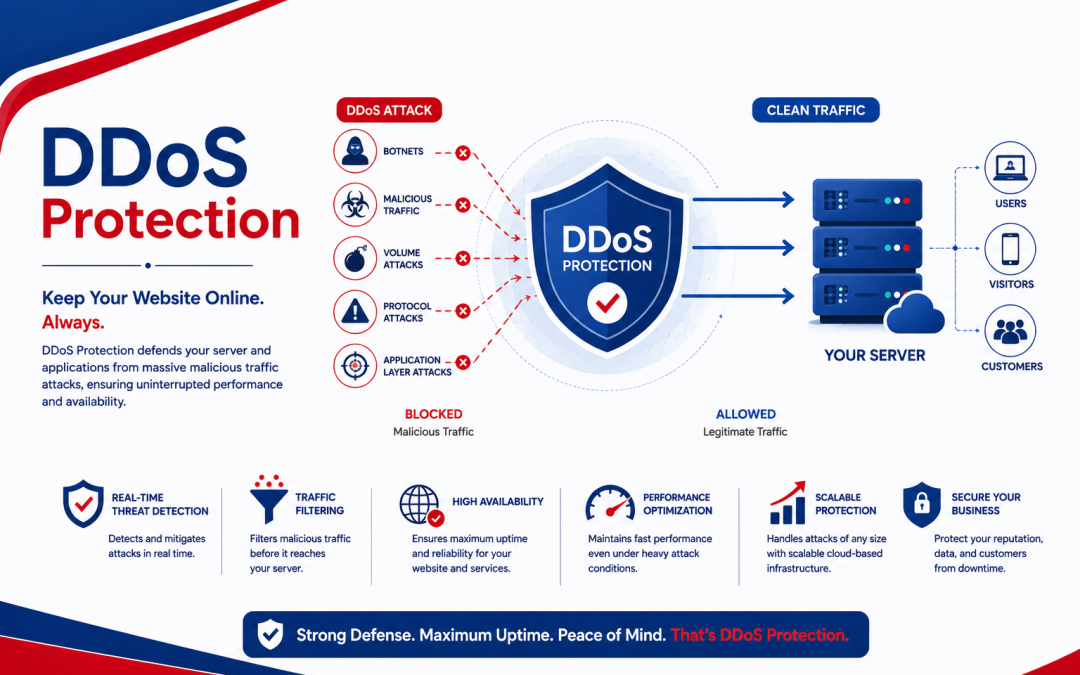
A DDoS attack (Distributed Denial of Service) is when many fake users or computers try to visit a website at the same time. This creates a huge amount of traffic and can slow down or crash the website.
Imagine a small shop being suddenly crowded by thousands of fake customers who never buy anything. Real customers cannot enter. That is what happens to a website during a DDoS attack.
How DDoS Protection Works
DDoS protection is a system used in web hosting to stop or reduce these harmful attacks. It works by checking all incoming traffic and blocking anything suspicious.
Here is how it works in simple steps:
- The system watches all visitors coming to a website.
- It checks if the traffic is real or fake.
- Fake traffic is blocked before it reaches the website.
- Real users are allowed to visit normally.
This helps keep the website online even during an attack.
Many hosting providers use cloud-based security systems and firewalls to protect websites from overload.
Key Tools Used in DDoS Protection
Web hosting companies use different tools to stop DDoS attacks:
- Firewalls
A firewall acts like a security gate. It blocks harmful traffic and allows safe visitors.
- Traffic Filtering
This system checks where the traffic is coming from. If too many requests come from the same place too quickly, they are blocked.
- Load Balancers
A load balancer spreads traffic across many servers so one server does not get overloaded.
- Rate Limiting
This limits how many requests one user or IP address can send in a short time.
- Cloud Protection Networks
Many cloud hosting platforms use large networks to absorb attack traffic and keep websites running.
Why DDoS Protection Is Important
DDoS protection is very important for websites because it keeps them safe and working properly.
- Prevents Website Downtime
Without protection, websites can crash and go offline during attacks.
- Protects Business Reputation
If a website is always down, users may stop trusting it.
- Keeps Online Services Running
Online shops, games, and apps need constant uptime to work properly.
- Improves Network Security
It blocks harmful traffic before it can reach the server.
- Supports High Traffic Safety
Even during normal traffic spikes, protection systems help manage load safely.
DDoS protection is like a strong security guard for websites. It checks traffic, blocks harmful requests, and keeps servers safe from overload.
By using firewalls, traffic filtering, load balancing, and cloud-based security systems, web hosting providers can stop attacks before they cause damage.
In simple words, DDoS protection keeps websites safe, stable, and always available for real users.