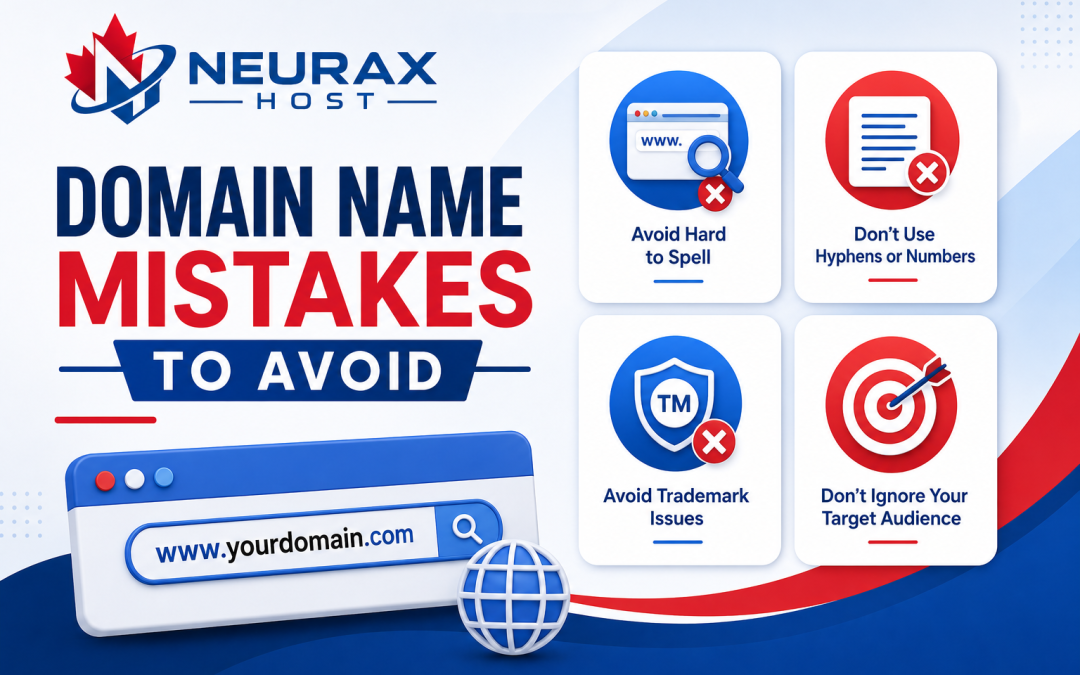
Choosing a domain name may look like a small task, but it can have a big effect on your website. Your domain is the address people use to find you online. Once you build your website, share it with customers, and print it on business materials, changing the domain later can become a lot of work.
That is why it is smart to check your domain name carefully before registering it. A good domain should be easy to remember, simple to type, and useful for your website as it grows.
Here are some common domain name mistakes to avoid, especially if you are new to web hosting and building a website.
Choosing a Domain That Is Too Long
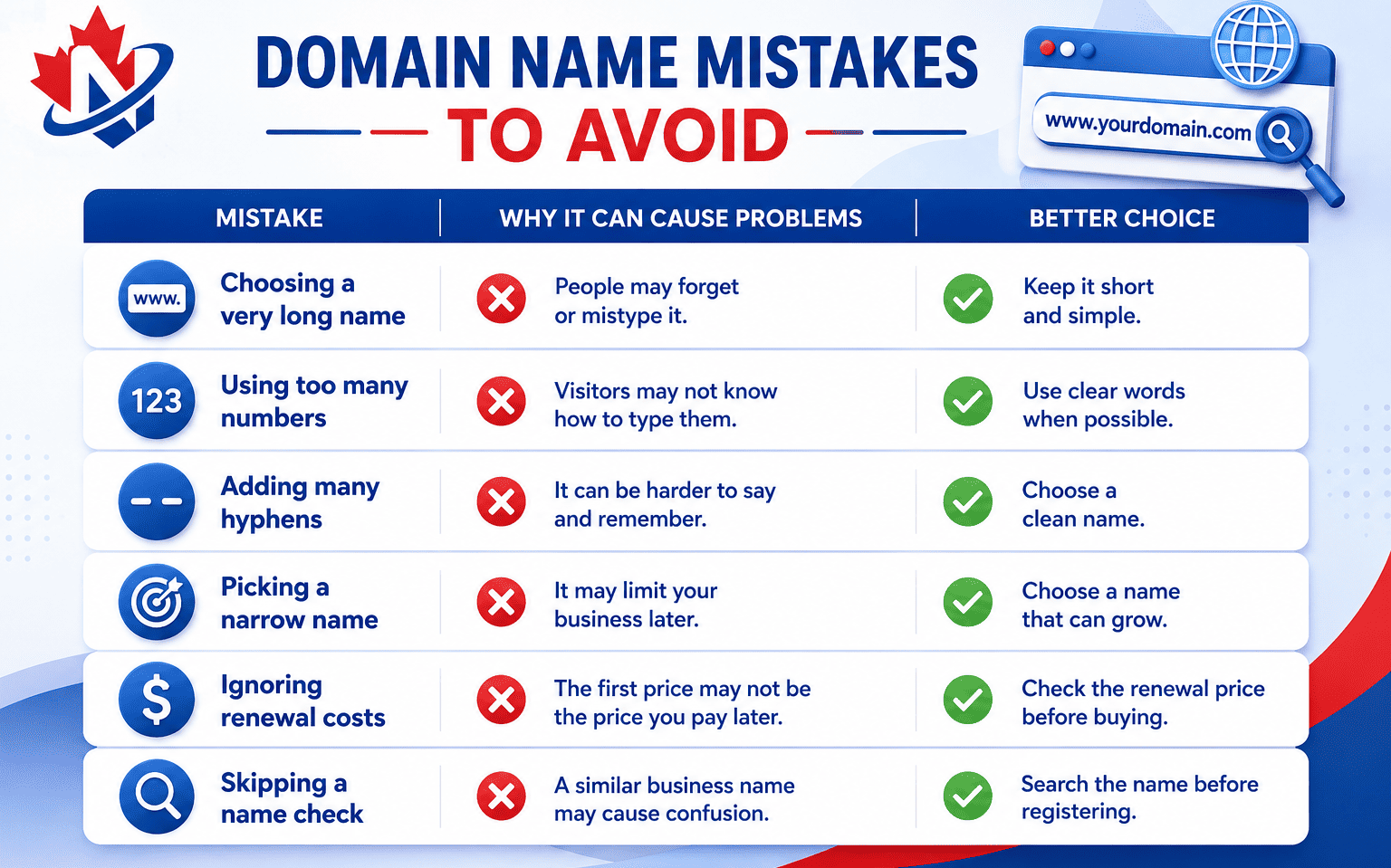
One of the most common mistakes is creating a domain with too many words. A long domain may explain your business, but it can be difficult for people to remember and type. For example, a name like BestHandmadeWoodenFurnitureShop.com is much harder to use than a shorter brand name.
Try to keep your domain as short as possible without making it confusing. Think about how it will look on a phone, business card, social media post, or email address. A simple test can help: say your domain name out loud. If someone can understand and spell it easily, you are moving in the right direction.
Using Confusing Numbers and Hyphens
Numbers and hyphens are not always bad, but using too many can create confusion. Imagine telling someone your website address over the phone. If your domain contains “4,” will they know whether to type 4 or four?
Hyphens can create a similar problem. A domain with several hyphens may be harder to tell someone and easier to type incorrectly. When possible, choose a name made from simple words. Your goal is to make your website address easy to remember, not difficult to explain.
Picking a Name That Is Too Narrow
Your business may start with one product, but it may not stay that way. For example, you may begin by selling handmade candles. If your domain is based only on one candle product, it could become awkward when you add home décor, gifts, or other products.
A flexible domain gives your website room to grow. Before registering your name, think about where your website could be in three or five years. Choose a name that works for your plans today but does not block future ideas.
Forgetting to Check the Name First
Finding an available domain does not mean you should register it right away. First, search the name online. Look for businesses, websites, brands, or services using the same or a very similar name. A confusingly similar name can make it harder for customers to know which website is yours.
You should also check whether the name could create a trademark problem. This is especially important if you plan to build a business around the domain. A few minutes of research can save you from the stress and cost of changing your website later.
Choosing a Domain Only for Search Engines
Some people try to fill their domain with keywords because they think it will automatically help them rank higher in search results.
That is not a good reason to choose a domain. Search engines use many signals to understand and rank websites. A keyword-filled domain does not guarantee a top position.
Instead, choose a name that is useful for real people. A memorable brand name can be more valuable than a long domain packed with keywords. Your website content, quality, speed, mobile experience, and other SEO factors also matter.
Ignoring the Domain Extension
The ending of your domain, such as .com, .org, or .net, is called a domain extension. The familiar .com is often a popular choice for businesses and general websites. However, other extensions can also work depending on your website.
The important thing is to choose one that makes sense for your audience. If your preferred .com is unavailable, do not choose a confusing name just to get a .com. A clear and memorable domain with a suitable extension can be a better choice.
Looking Only at the First-Year Price
A cheap domain can look attractive when you are starting a website. But do not look only at the first-year price. Many domain registrations have a different renewal price after the first registration period. Check the renewal cost before you buy.
Also check whether privacy protection, email features, or other services cost extra. The same rule applies when choosing web hosting. Look beyond the starting price and check what you will pay later. A good hosting plan should also provide useful features such as security, backups, reliable performance, and customer support.
Forgetting That Your Domain and Hosting Are Different
New website owners often think a domain and web hosting are the same thing. They are not. Your domain is your website address. Your web hosting is where your website files are stored.
Think of it like a house. The domain is the address people use to find the house. Hosting is the space where the house exists. You need both for a typical website. Some providers offer them together, which can make setup easier for beginners.
Final Check Before You Register
Before clicking the registration button, take one last look at your domain. Make sure it is easy to spell, easy to say, and easy to remember. Check the name online, think about future growth, and review the registration and renewal prices.
Most importantly, do not rush. A domain name may be only a few words, but it can become a long-term part of your website and brand. Choose a name that works for people today and gives your website room to grow tomorrow.