
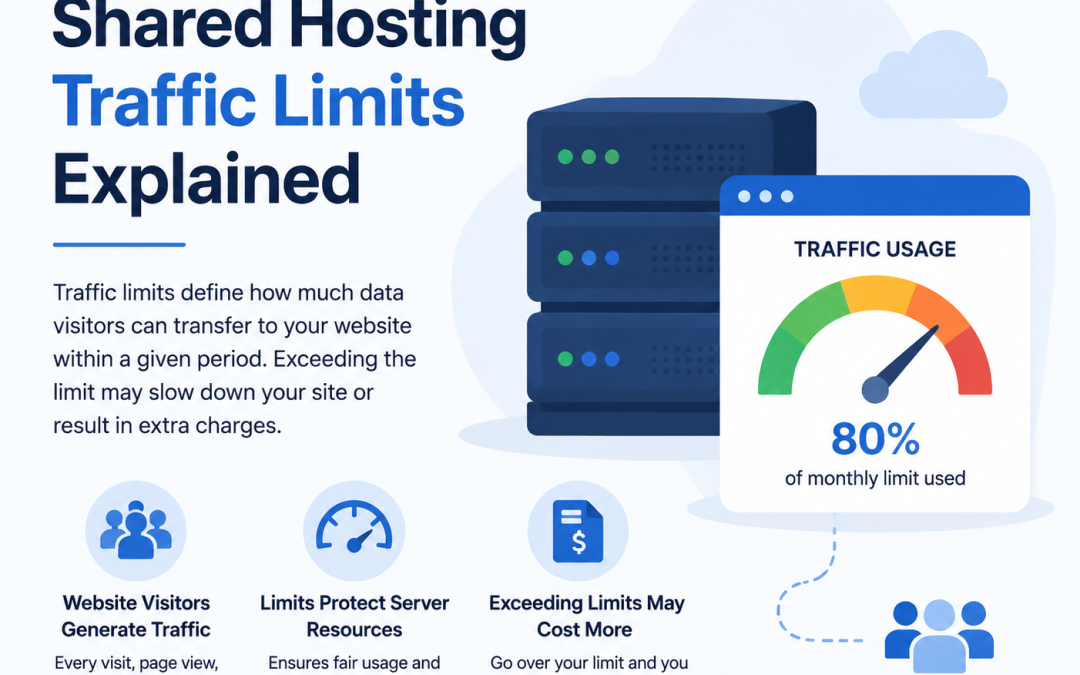
Starting with shared hosting is a smart choice for small businesses, blogs, and portfolio websites. It is affordable, simple to manage, and perfect for beginners. However, as your website grows, traffic increases quickly. A sudden spike in visitors may slow down your website or even crash it completely. Studies show that 53% of users leave a website if it takes more than 3 seconds to load. That is why understanding shared hosting bandwidth, website traffic limits, and hosting performance is important before your business starts losing customers.
Understanding Shared Server Resources and Web Hosting Capacity
Shared hosting works like an apartment building where many websites use the same server. All websites share CPU, RAM, storage, and bandwidth together. Because of this, shared server resources can become overloaded when one website receives heavy traffic.
Most standard hosting plans support:
- 300–800 daily visitors
- 10,000–25,000 monthly visitors
- 30,000–75,000 monthly page views
Premium plans can handle:
- 2,000–3,000 daily visitors
- 60,000–90,000 monthly visitors
- Up to 270,000 monthly page views
However, these numbers depend on website resource usage and how optimized your website is. A fast and clean website can handle more traffic smoothly.
If your business is growing fast, it is always smart to contact a reputed service provider to check your hosting capacity before problems begin.
Website Loading Speed Affects Customer Experience
People do not like waiting. In fact, research shows that a 1-second delay in website loading speed can reduce conversions by 7%. Therefore, fast hosting directly impacts customer satisfaction and sales.
Several factors slow down hosting performance:
- Large images
- Too many plugins
- Poor website coding
- Heavy videos hosted on the server
- Too many database requests
For example, one 5MB image viewed 1,000 times uses 5GB of bandwidth. Because of this, unoptimized images quickly consume shared hosting bandwidth.
To improve speed:
- Compress images
- Use WebP format
- Enable lazy loading
- Remove unnecessary plugins
- Use CDN services
As a result, your website loads faster, visitors stay longer, and Google rankings improve. Choosing the best service providers for hosting optimization can also improve your website speed significantly.
Concurrent Website Visitors and Traffic Spikes Management
Many website owners only count total visitors. However, the real challenge comes from concurrent website visitors, which means how many users are active at the same time.
For example:
- 1,000 visitors spread across the day = manageable
- 200 visitors at one moment = possible crash
Most shared hosting plans support only 20–50 concurrent users comfortably. During sales, promotions, or viral social media traffic, your website may suddenly struggle.
This is where traffic spikes management becomes important. Websites without proper optimization may slow down or display server errors during busy periods.
To handle traffic spikes better:
- Use caching systems
- Avoid hosting videos directly
- Upgrade PHP versions
- Optimize databases
- Reduce unnecessary scripts
Moreover, businesses expecting seasonal traffic should talk to trusted hosting providers about better scalability options early.
Hosting Scalability Options for Growing Businesses
Every successful website eventually outgrows shared hosting. As traffic increases, businesses need better hosting scalability options.
Signs your hosting is struggling include:
Slow loading pages
- Frequent downtime
- “503 Service Unavailable” errors
- Database connection issues
- Slow WordPress dashboard
- Crashes during promotions
If your website reaches:
- 1,500+ daily visitors
- 45,000+ monthly visitors
- 100,000+ monthly page views
then it may be time to upgrade.
Fortunately, scalable hosting allows businesses to increase RAM, bandwidth, and storage easily. Therefore, your website can continue growing without performance issues.
Many business owners wait too long before upgrading. As a result, they lose customers during important traffic spikes. To avoid this, contact professional hosting service providers before your website reaches its limit.
High Traffic Website Hosting Improves Server Uptime Performance
Reliable hosting is critical for online businesses. Even a few minutes of downtime can damage customer trust and reduce sales. Research shows that businesses lose thousands of dollars yearly because of poor server uptime performance.
High-quality hosting providers usually offer:
- 99.9% uptime guarantee
- NVMe SSD storage
- LiteSpeed servers
- Advanced caching systems
- Multiple data center locations
These features improve hosting performance and help websites stay online during busy periods.
Additionally, high traffic website hosting uses stronger infrastructure to support growing websites. Better hardware means faster page loading, smoother browsing, and improved customer experiences.
If your website is important for sales or lead generation, working with a reputed hosting company is one of the smartest business decisions you can make.
Website Resource Usage: What Uses the Most Hosting Power?
Many website owners do not realize what actually consumes server resources. Some website features use very little power, while others heavily impact hosting performance.
Heavy resource users include:
- E-commerce stores
- Live social media feeds
- Poorly coded themes
- Large media files
- Too many plugins
- Complex databases
Meanwhile, lightweight websites include:
- Blogs
- Static business pages
- Simple contact forms
- Optimized landing pages
Therefore, smart optimization reduces website resource usage and helps websites handle more traffic without upgrading immediately.
A well-optimized website with CDN support can handle over 10,000 daily visitors even on shared hosting. That is why website optimization matters just as much as hosting quality.
Shared hosting is excellent for beginners, but every website has traffic limits. As your audience grows, understanding shared hosting bandwidth, web hosting capacity, and website traffic limits becomes very important.
Fast loading speed, strong uptime, and proper scalability help businesses keep customers happy and improve online growth. Moreover, upgrading before your hosting struggles can prevent lost sales and downtime.
If your website is slowing down during busy hours, now is the right time to contact the best service providers for reliable and scalable hosting solutions. A trusted hosting partner can help your business grow smoothly while delivering the fast experience your customers expect.