
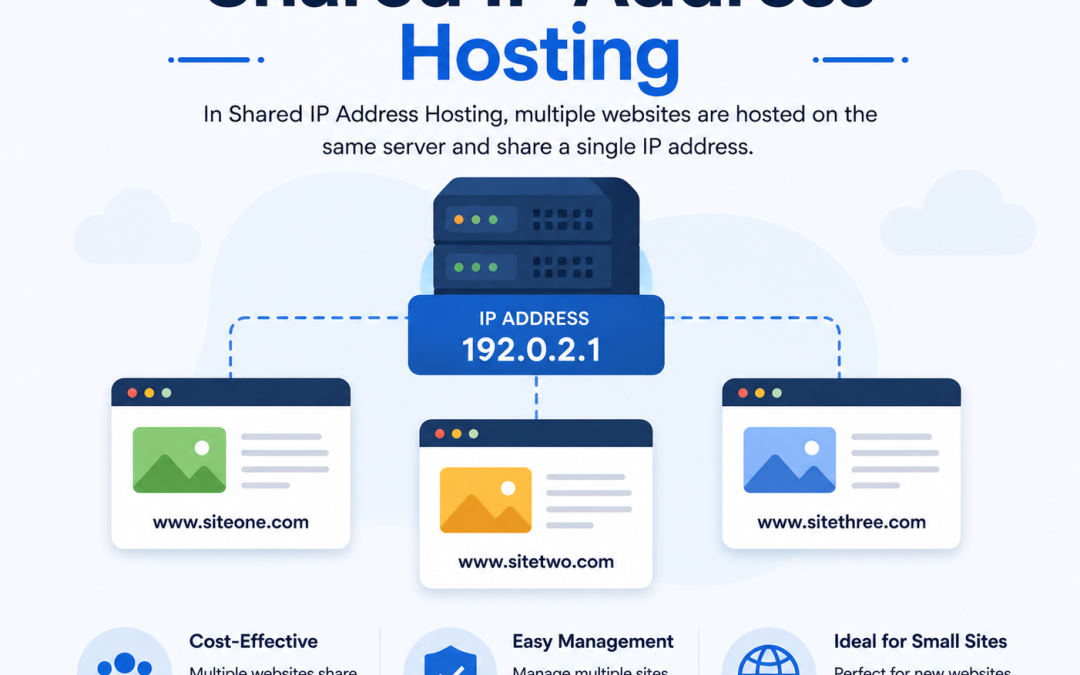
Many website owners believe every website needs its own IP address. However, that is not true anymore. Today, more than 70% of websites use shared IP address hosting because it is affordable, safe, and easy to manage. Modern hosting technology allows multiple websites on one IP without affecting website performance or SEO. Therefore, businesses, bloggers, and online stores can save money while still enjoying fast and secure hosting services. Understanding how web hosting IP address systems work helps businesses choose the right hosting solution for future growth.
What Is a Web Hosting IP Address?
A web hosting IP address is a unique number connected to a hosting server. When someone types your domain name into a browser, the internet connects visitors to your server using that IP address.
Every website needs:
- A domain name
- A hosting server
- An IP address
However, one IP address does not always mean one website. Thanks to virtual hosting technology, many websites can share one IP smoothly.
For example, websites like:
- myshop.com
- businesssite.net
- portfolio.org
can all work on the same IP address without problems.
This system reduces hosting costs and improves hosting network resources management for hosting companies.
How Multiple Websites on One IP Actually Work
Modern hosting uses virtual hosting technology called name-based hosting. This technology allows servers to identify websites using domain names instead of separate IP addresses.
Here is how it works:
- A visitor enters your domain name
- DNS settings connect the domain to the server IP
- The browser sends the website name to the server
- The server loads the correct website files
As a result, multiple websites on one IP can work independently while sharing the same hosting server.
This setup is now standard in almost every shared hosting server environment because it saves resources and lowers hosting costs.
Shared Hosting Server Benefits for Small Businesses
Small businesses often choose shared IP address hosting because it is budget-friendly and easy to manage. Studies show that shared hosting can reduce hosting costs by up to 80% compared to dedicated hosting.
Benefits include:
- Lower monthly costs
- Easy website setup
- Fast domain connection
- Simple server management
- Beginner-friendly hosting tools
Additionally, hosting providers manage server maintenance, updates, and security automatically. Therefore, business owners can focus on customers instead of technical issues.
If you are launching a blog, online store, or company website, contacting a reputed service provider can help you choose the right hosting package for your business needs.
Website Domain Mapping and DNS Settings Explained
Many beginners feel confused about website domain mapping and DNS settings and IP address connections. However, the process is actually simple.
DNS works like the internet’s phonebook. It connects your domain name to your hosting server IP address.
For example:
yourstore.com → points to hosting server IP
portfolio.net → points to the same IP
Even though both websites use the same server, visitors still see completely different websites.
Good website server configuration ensures every domain loads correctly and securely. Therefore, proper DNS setup is very important for website performance and uptime.
Many trusted hosting providers offer free DNS management tools to make domain mapping easier for customers.
SSL Certificate Support on Shared IP Hosting
Years ago, websites needed a dedicated IP address to install SSL certificates. However, modern hosting technology changed everything.
Today, SSL certificate support works perfectly on shared hosting using Server Name Indication (SNI). This means websites can use HTTPS security even while sharing one IP address.
Benefits of SSL include:
- Better customer trust
- Secure online payments
- Improved Google rankings
- Data encryption protection
Research shows that 85% of online shoppers avoid websites without HTTPS security. Therefore, SSL is now essential for every business website.
Fortunately, most hosting companies now provide free SSL certificates with shared hosting plans. Contact the best service providers to ensure your hosting package includes SSL protection.
Dedicated IP Address vs Shared IP Address Hosting
Many business owners ask whether they need a dedicated IP address. The answer depends on business size and website goals.
Shared IP Hosting
Best for:
- Blogs
- Small business websites
- Portfolio websites
- Startup eCommerce stores
Advantages:
- Lower cost
- Easy management
- Strong hosting performance
- Full SSL support
- Dedicated IP Address
Best for:
- Large email marketing systems
- Financial websites
- Advanced server security
- Enterprise-level hosting
Advantages:
- Separate email reputation
- Custom server rules
- More advanced control
However, most websites do not need a dedicated IP. Shared hosting works perfectly for regular businesses and websites.
Hosting Network Resources and Server Performance
One reason hosting providers use shared IP systems is to manage hosting network resources efficiently. IPv4 addresses are limited worldwide, so sharing IPs helps providers support millions of websites.
Good hosting providers improve performance using:
- NVMe SSD storage
- LiteSpeed web servers
- Cloud infrastructure
- CDN integration
- Advanced caching systems
These features improve website speed and reduce downtime even on shared servers.
Additionally, optimized website server configuration helps websites load quickly during high traffic periods. Fast websites improve customer experience and increase conversion rates.
Studies show that websites loading in under 2 seconds have much higher customer engagement. Therefore, choosing the right hosting company is extremely important for business growth.
Common Myths About Shared IP Address Hosting
Many myths still confuse website owners. Let’s clear up the facts.
Myth 1: Shared IP Hurts SEO
Fact: Google ranks websites based on quality, not IP sharing.
Myth 2: Shared Hosting Is Unsafe
Fact: Modern servers isolate accounts using strong security systems.
Myth 3: Shared IP Cannot Use HTTPS
Fact: Modern SSL technology fully supports HTTPS on shared hosting.
Therefore, shared hosting remains a safe and affordable option for most businesses.
Today, shared IP address hosting powers millions of websites around the world. Thanks to modern virtual hosting technology, businesses can safely run multiple websites on one IP without SEO or security problems.
Shared hosting is affordable, beginner-friendly, and fully compatible with SSL certificates. Moreover, proper DNS settings and IP address configuration help websites run smoothly and securely.
If you want reliable performance, strong security, and affordable hosting, now is the perfect time to contact the best service providers for professional hosting solutions. A trusted hosting company can help your website grow faster while keeping your business secure online.